
Sepsis Hides in Plain Sight
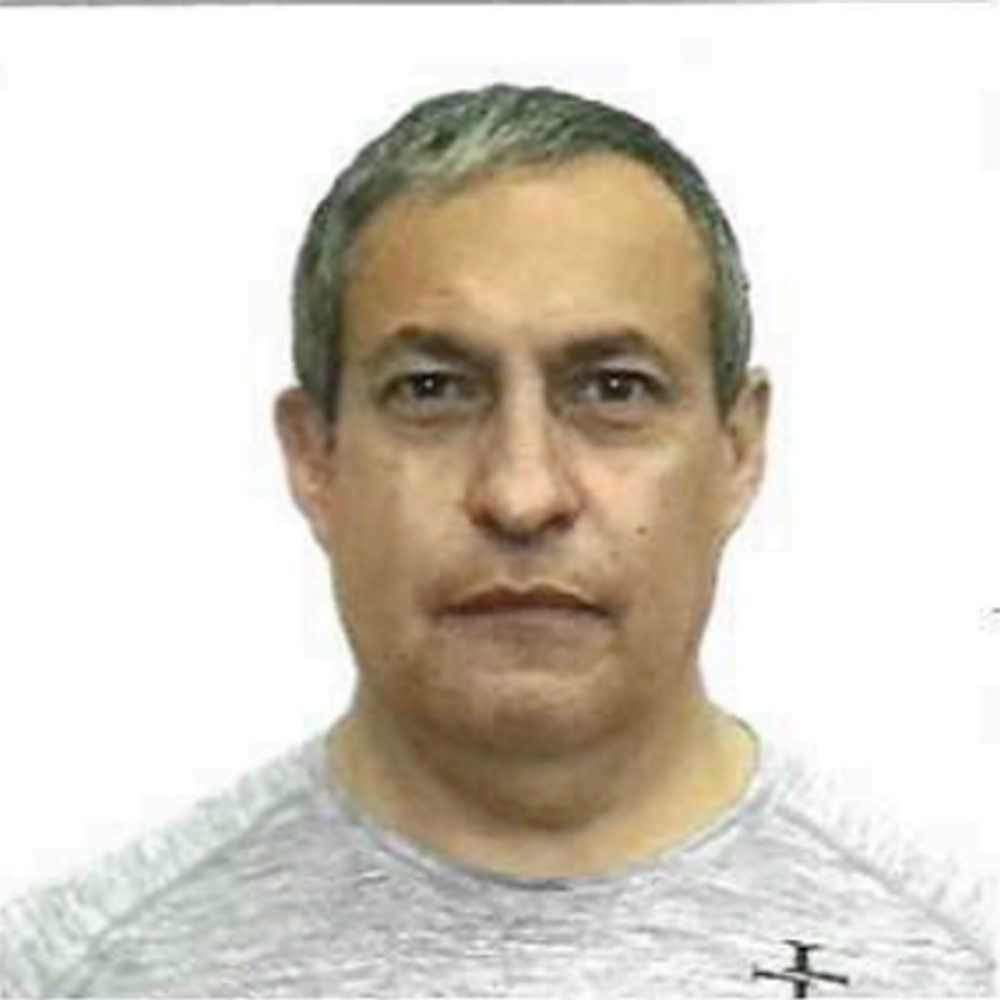
What the Death of Kyle Busch May Teach Us About Recognition, Delay, and the Race Against Time

There are some deaths that hit harder because they force us to confront an uncomfortable truth.
The reported death of NASCAR driver Kyle Busch from severe pneumonia complicated by sepsis is one of those moments.
According to public reporting, Busch had reportedly been ill in the days leading up to his death. During a race weekend, reports indicated he mentioned feeling unwell and needing to see a doctor after the race. Days later, he became critically ill and ultimately died from complications related to pneumonia and sepsis.
Out of respect for Busch, his family, and the facts, we need to be careful not to oversimplify what happened. We do not know every detail of his medical condition, and we should avoid pretending we do.
But there is an important lesson here.
Sepsis often hides in plain sight.
It kills hundreds of thousands of people every year, yet most people — including many clinicians — still struggle to recognize it early. Not because they are lazy. Not because they do not care. But because sepsis rarely announces itself clearly in the beginning.

It often starts looking like something ordinary.
A Cold.
A Sinus Infection.
The Flu,
Bronchitis
A stomach bug
.Exhaustion.
Dehydration.
"I just need rest."
"I just need fluids."
"I just need to push through this....gotta work"
And then suddenly the patient is crashing.
The scary part is that sometimes the transition from “sick” to “critically ill” happens incredibly fast. In hours - even minutes.
That is what makes sepsis dangerous.
Sepsis Is Not Just an Infection
One of the biggest misunderstandings in medicine is the belief that sepsis is simply a severe infection.
It is not.
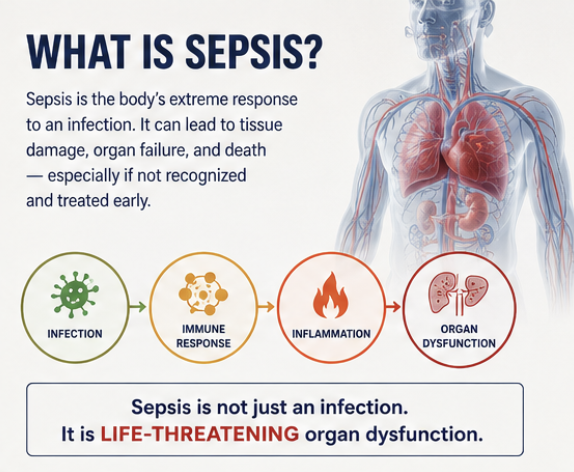
Sepsis is the body’s dysregulated and overwhelming response to infection that begins damaging its own tissues and organs.
That distinction matters.
People can survive terrible infections. People can also die from infections that initially seemed manageable.
The difference is often not just the organism. It is the body’s response.
In sepsis, the immune system begins triggering widespread inflammation, endothelial dysfunction, capillary leak, microvascular injury, coagulation abnormalities, impaired oxygen delivery, and eventually organ dysfunction.
The body starts losing its ability to maintain balance.
Perfusion becomes impaired. Cells begin struggling to utilize oxygen effectively. Blood vessels become leaky. Inflammatory mediators surge. Coagulation pathways activate. The cardiovascular system compensates — until it cannot.
Eventually the patient can spiral into septic shock, multi-organ failure, respiratory failure, renal failure, altered mental status, and death.
And here is the brutal reality:
By the time septic shock becomes obvious, we are already late in the process.
Pneumonia: One of the Most Dangerous Gateways to Sepsis
Public reporting indicates Busch ultimately died from severe pneumonia complicated by sepsis.
That matters because pneumonia remains one of the leading causes of sepsis worldwide.
And pneumonia can be deceptively subtle.
Not every patient presents dramatically.
Some walk around for days believing they have:
A lingering cold
Allergies
Bronchitis
Fatigue
A “viral thing”
A chest cold
Some never develop high fevers. Some do not initially look critically ill. Some continue working. Some continue training. Some continue competing.
Especially in high-performance cultures.
Athletes, EMS, Fire, Law Enforcement, Military, Healthcare, Construction, Blue-collar Professionals. Entire professions are built around pushing through illness.
Unfortunately, biology does not care about toughness.
A patient can compensate remarkably well — until they suddenly cannot.
Why Sepsis Gets Missed
If sepsis is so deadly, why do clinicians still miss it?
Because early sepsis is messy.
It rarely walks into the emergency department with a flashing neon sign.
Early sepsis may look like:
General Weakness
Fatigue
Mild Confusion
Tachypnea
Poor Appetite
Dehydration
Mild Hypotension
Flu-like Symptoms
Slightly Abnormal Vitals
Anxiety
“Not acting right”
Malaise
Shortness of Breath
Increased Sleeping
Decreased Urine Output
Elevated Heart Rate
**Not all symptoms need present - often it is just one or two.
And here is the dangerous part:
Many of these findings are common. Many are nonspecific. Many can be explained away.
That creates anchoring.
“He’s just dehydrated.”
"She has the flu.”
"It’s probably viral.”
“He just needs fluids.”
“She’s exhausted.”
Sometimes those explanations are correct. Sometimes they are disastrously wrong.
The Problem with Waiting for “Obvious Sepsis”
Modern medicine has become very good at recognizing late sepsis.
The problem is that we often wait for late sepsis before emotionally committing to the diagnosis.
Many clinicians unconsciously, or consciously due to outdated training and protocols, wait for:
Severe Hypotension
Altered Mental Status
High lactate
Mottling
Septic Shock
Vasopressor Requirements
Multi-Organ Dysfunction Syndrome (MODS)
By then the inflammatory cascade that is the backbone of Sepsis, is already deeply underway.
This is part of the reason sepsis remains so deadly despite modern medicine.
We tend to activate aggressively once the patient looks terrible.
The challenge is training to suspect sepsis before the patient looks terrible.
SIRS, qSOFA, SOFA — And Why We Still Miss Sepsis
Healthcare has developed multiple tools to help identify septic patients. The problem is that many clinicians misunderstand what these tools are actually designed to do.
SIRS
The Systemic Inflammatory Response Syndrome criteria were designed to identify inflammatory responses.
Typically:
Temperature Abnormality
Tachycardia
Tachypnea
Abnormal White Blood Cell Count
The problem?
SIRS is sensitive but not specific. Lots of patients trigger SIRS.
Trauma
Exercise
Stress
Influenza
Anxiety
Dehydration
Pain
Over time, many clinicians began mentally dismissing SIRS because it produced too many false positives. Unfortunately, that also meant some clinicians stopped respecting early physiologic warning signs.
qSOFA
Quick SOFA attempted to simplify identification.
Typically:
Altered Mental Status
Respiratory Rate ≥22
Systolic BP ≤100
Two or more criteria raise concern for poor outcomes.
But qSOFA has limitations.
It is not truly an early sepsis screening tool; it is better viewed as a mortality-risk indicator. Many septic patients do not initially trigger qSOFA. That means if clinicians rely solely on qSOFA, early sepsis may still be missed.
SOFA
The full Sequential Organ Failure Assessment score is more comprehensive and clinically useful in critical care. But in prehospital medicine and many emergency settings, it is often impractical for rapid early recognition.
Which brings us to the uncomfortable truth: No scoring tool replaces clinical suspicion.
The EMS Problem
EMS sits in one of the most important positions in the entire sepsis chain. We often encounter patients during the transition phase.
Not fully stable. Not fully crashing.
The patient who “just doesn’t look right.”
The patient who is compensating — but barely.
And yet sepsis education in EMS is often oversimplified.
Many providers are taught:
Fever
Infection
Hypotension
Tachycardia
Fluid Bolus
Sepsis Alert
The real world is rarely that clean, septic patients may be:
Normotensive Initially
Afebrile
Any age with vague symptoms
Slightly Confused
Tachypneic Before Hypotensive
Hyperglycemic
Weak and Pale
Complaining of Exhaustion More Than Pain
Presenting After Days of “flu-like symptoms”
And one of the earliest clues is often not a number, it is the overall clinical picture.
The patient simply looks sick.

Tachypnea: The Underappreciated Clue
One of the most overlooked early sepsis indicators is respiratory rate.
Not oxygen saturation. Respiratory rate.
The body often compensates for metabolic stress early through increased respiratory drive.
A respiratory rate of 22, 24, or 28 may be one of the first objective clues that the patient is physiologically struggling.
Unfortunately, respiratory rate is also one of the most inaccurately measured vital signs in medicine.
Clinicians frequently estimate it. Chart normal values automatically. Or fail to appreciate its significance.
Meanwhile the patient is quietly deteriorating.
Sepsis Is a Time-Critical Disease

In trauma we say: “Time is blood.”
In stroke: “Time is brain.”
In sepsis: "Time is organ function and loss of organ function is deadly!"
Every hour of delayed recognition and treatment matters.
Early intervention may include:
Oxygenation and Ventilation Support
Aggressive Reassessment
IV or IO Access
Fluid Resuscitation when Appropriate
Early Antibiotics
Vasopressors When Indicated
Source Control
Lactate Measurement
Frequent Reassessment of Perfusion and Mentation
But none of those interventions happen if sepsis is not suspected. And that may be the most important lesson of all.
The Cultural Problem: “Push Through It”
There is another issue we rarely discuss honestly.
Modern culture rewards people for ignoring illness.
Especially high performers.
Athletes, First Responders, Nurses, Physicians, Military Personnel, Executives, Parents, Truck Drivers, People working overtime.
People praise those who “gut it out.”
Until the body loses.
This is not about blaming patients. And it is not about blaming Kyle Busch.
It is about recognizing that severe illness often develops in people who are still trying to function.
People who think:
“I can make it through one more shift.”
“One more hour.”
“One more minute.”
Sometimes they can.
But if Sepsis is involved, often they cannot.
What We Need To Do Better
As a healthcare system and as a profession, we need to improve how we think about sepsis.
Not just how we protocolize it, but how we think about it.
We need clinicians to become more comfortable with uncertainty.
We need to normalize saying: “This patient may be septic even though they do not look critically ill yet.”
We need to stop treating sepsis like a diagnosis that only exists once hypotension appears.
We need better education on:
Early Physiologic Compensation
Tachypnea
Subtle Organ Dysfunction
Elderly Sepsis Presentations
Pneumonia-Associated Sepsis
Reassessment Trends
Clinical Gestalt
The importance of intuition backed by physiology
And perhaps most importantly:
We need to respect the sentence: “This patient looks sick.”
Experienced clinicians know exactly what that means.

Final Thoughts
Kyle Busch’s death is tragic. The entire Black Flag EMS team is saddened, and heartbroken. Kyle, his family and team are in our prayers.
And while we should avoid simplistic conclusions or armchair hindsight, his story may help start an important conversation.
Sepsis remains one of the deadliest and least understood medical emergencies in the world.
It moves fast. It often stealthy early on. It deeply punishes delayed recognition. And sometimes it takes people who were functioning normally just days before.
If there is a lesson here for clinicians, EMS providers, nurses, physicians, patients, and families, it may be this:
Do not wait for sepsis to become obvious before respecting the possibility. Because by the time it becomes obvious, the body may already be losing the race.
It is said that Kyle was an inspiration to many, certainly to his family and team and he is the inspiration for this article and others we will publish on this topic. We truly hope that his passing brings on-going visibility and greater awareness to this pathology, as well as better tools and education.
God Bless You Kyle - Your Family - Friends - Team.


Comments